
Random Testing Works Before a Test Ever Happens

Many employers measure the success of a drug testing program by asking one question: How many positives did we find?
It's a reasonable metric. Positive results are visible, measurable, and easy to report. But the value of a drug testing program isn't limited to the drug use it detects. In many cases, its greatest value comes from the drug use it helps prevent.
People behave differently when random testing exists.
Every testing type serves a different purpose:
Pre-employment testing creates a single, predictable checkpoint before hire. Candidates know the test is coming and can prepare accordingly. Post-accident testing is reactive, occurring only after an incident has already happened.
Random testing creates something neither of those approaches can: an ongoing possibility that a test could occur at any time.
That distinction matters. When testing is a one-time event, employees can plan around it. When testing is continuous and unpredictable, the decision to use drugs carries greater day-to-day risk. The possibility of selection never fully disappears, which can influence choices long before a testing notification is issued.
The National Survey on Drug Use and Health (NSDUH) tells a remarkably consistent story.
Across nine years of survey data, workers employed by organizations with random testing programs reported substantially lower rates of recent illicit drug use than workers employed by organizations with no workplace testing program in place.
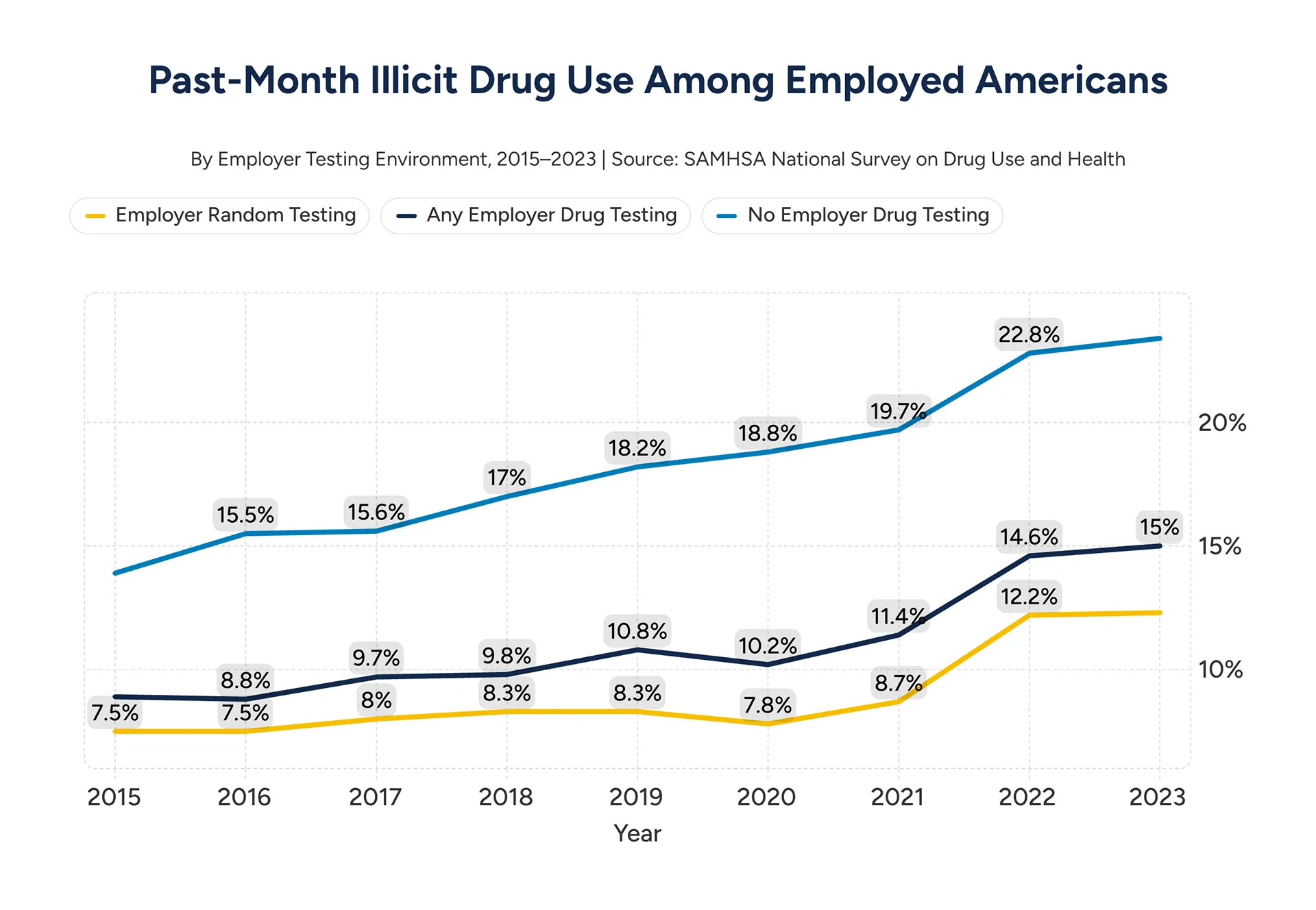
The NSDUH measures behavior, not test results. It shows how employees report their own drug use while working under different testing environments.
The takeaway is straightforward: people make different choices when random testing is an ongoing and unpredictable possibility.
Detection and deterrence.
The Quest Diagnostics Drug Testing Index™ (DTI) provides another perspective on the impact of random testing.
The DTI is an annual analysis of workforce drug testing trends across the United States, drawing from millions of workplace drug test results each year. Looking at positivity rates over time reveals an important difference between identifying drug use and discouraging it.
Random testing creates value in two important ways:
First, among the general U.S. workforce, random-test positivity rates have consistently been higher than pre-employment positivity rates. At first glance, that may seem counterintuitive. The explanation is simple: applicants know when a pre-employment test is coming, while employees selected for a random test do not. Predictable testing can be anticipated. Random testing cannot.
As a result, random testing helps identify ongoing drug use that may be missed by a single screening conducted before employment begins.
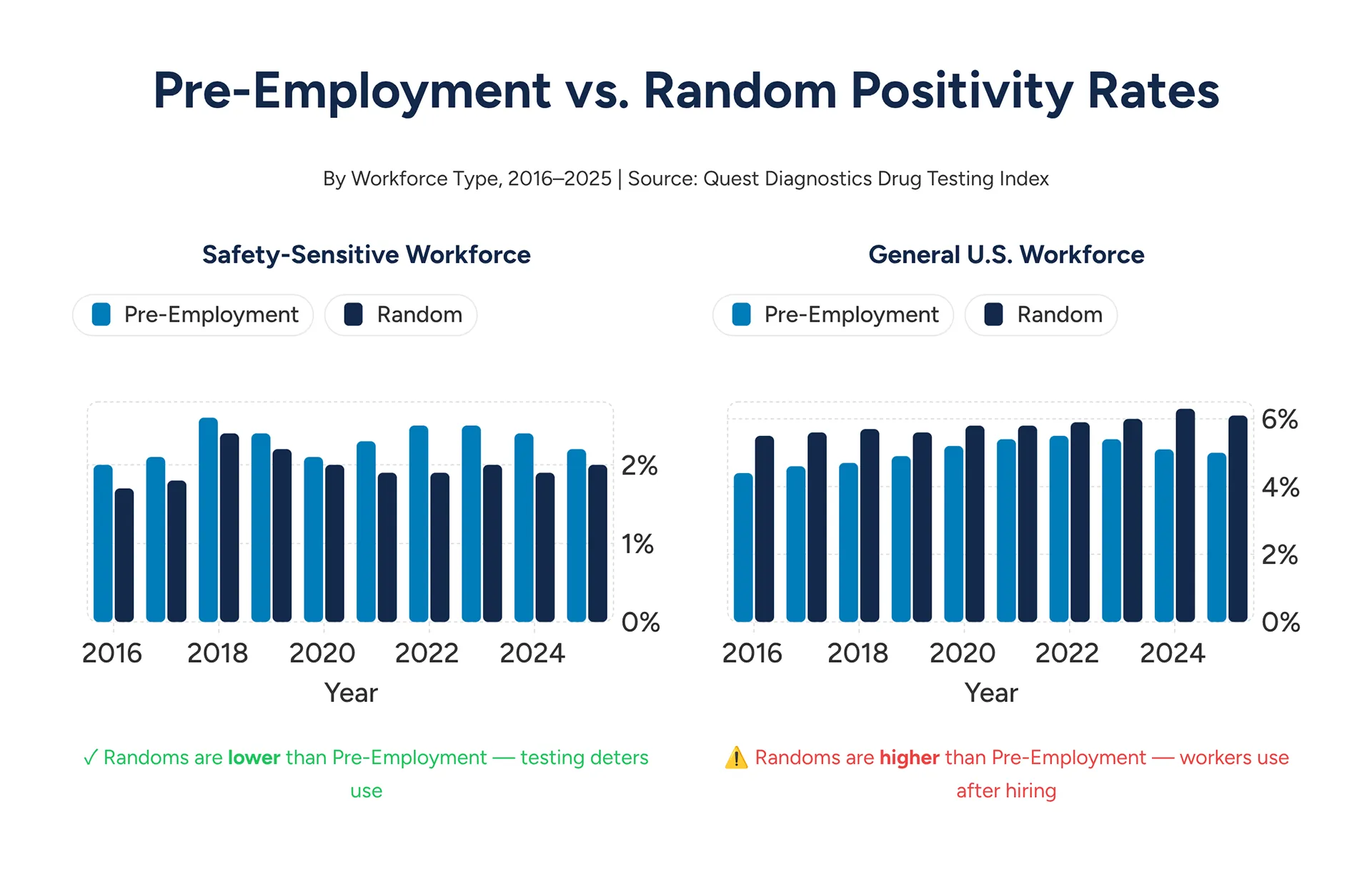
In contrast, among the federally mandated safety-sensitive workforce, where employees operate under long-established random testing requirements, random-test positivity rates have consistently remained lower than pre-employment positivity rates.
These organizations also consistently report lower positivity rates across every other testing category, including post-accident testing.
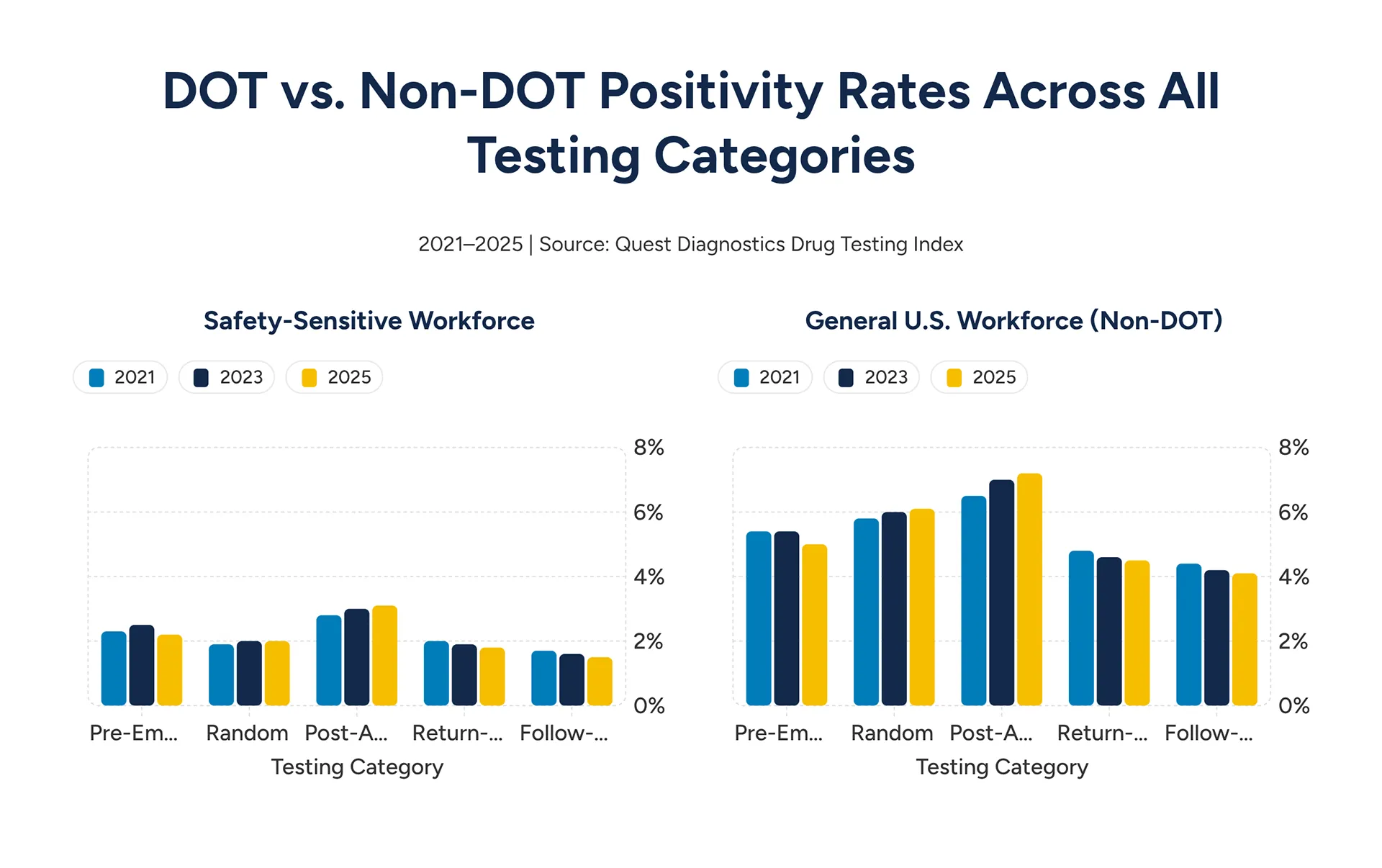
While drug testing is not the only factor that influences workplace safety outcomes, the pattern is difficult to ignore. Organizations with standardized, continuous testing expectations appear to operate in a fundamentally different risk environment than those without them.
Prevention is the real goal.
Many employers view drug testing as a way to simply identify substance users. But the strongest programs do more than identify risk. They help reduce it.
By creating an ongoing and unpredictable possibility of testing, random programs can influence employee behavior long before a selection occurs. That makes random testing more than a detection tool. Its value extends to the risks it helps prevent, the incidents that never occur, and the safer workplace culture it helps reinforce over time.
Whether you're evaluating an existing program or considering ways to strengthen your testing strategy, it's important to look beyond detection alone and consider the deterrent effect random testing can have across your workforce.
TEAM helps organizations administer compliant, defensible random testing programs that support both detection and prevention. Contact us to learn how a well-managed testing program can help reduce risk and strengthen workplace safety.