
The New Alert Compliance Engine: A Smarter Way to Evaluate Compliance
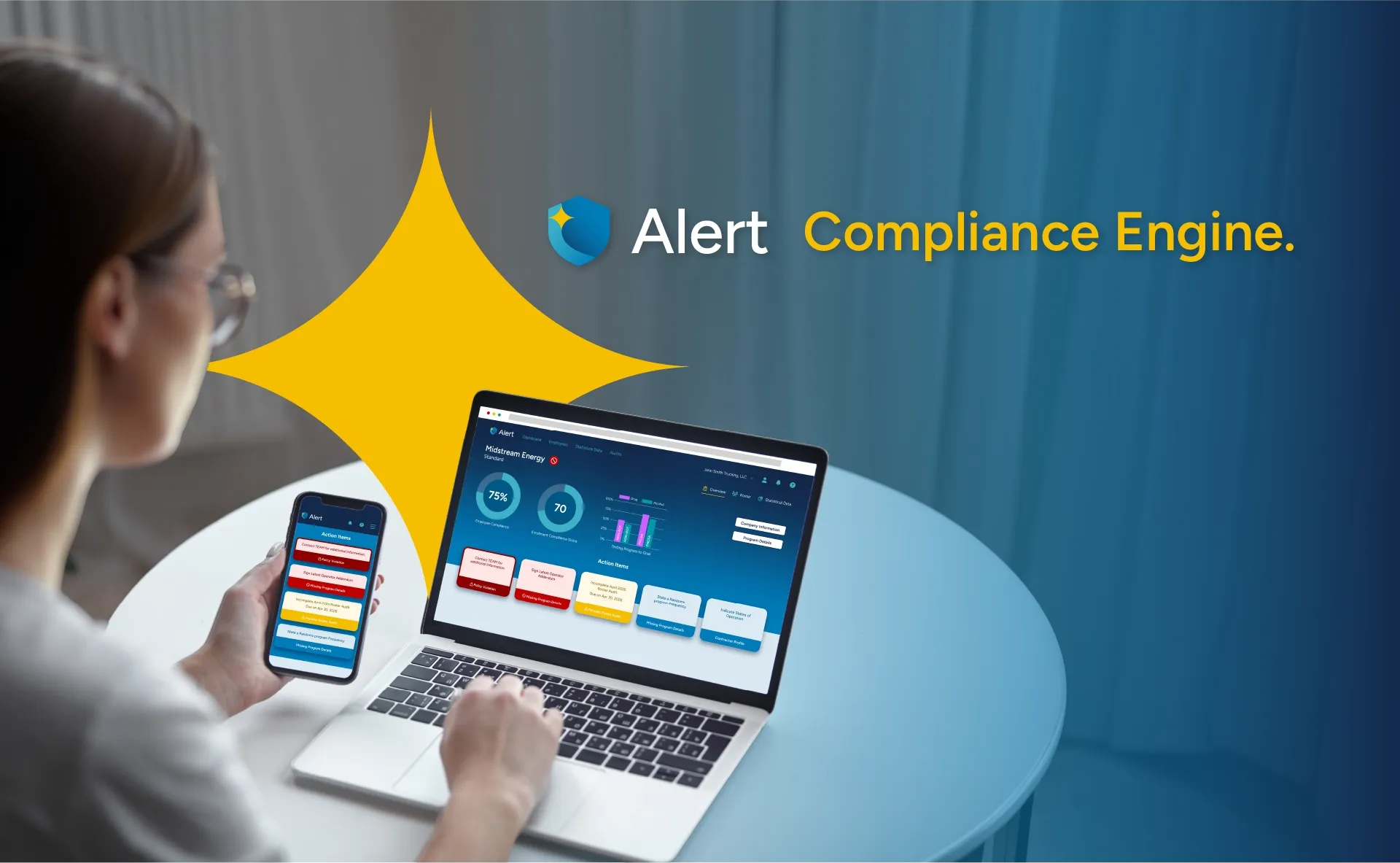
More control. Less noise. The same strong standards.
Contractor oversight today runs through software systems that track and enforce compliance requirements. But those systems don’t just manage data. How deeply they evaluate requirements and what context they consider has real operational consequences: who is cleared to work and how quickly that happens.
Which is why TEAM has made a major capability enhancement for the Alert Compliance Engine, the first of this scale since the launch of Alert 4.0 in 2023. This release marks a foundational re-architecture of how compliance is evaluated in Alert, supported by important new visuals and interface updates.
The Alert Compliance Engine is the backbone of the system, evaluating drug and alcohol program data points against requirements as users provide them and determining compliance in real time.
That real-time automation remains one of Alert’s core strengths.
What has changed is the model around it: Alert now gives organizations more control, more nuance, and better visibility into what drives compliance.
When compliance is all-or-nothing, minor gaps can create major disruption.
In a binary compliance model, one incomplete administrative task can carry the same practical consequence as a serious program deficiency. A missing billing contact, for example, can trigger the same outcome as a failed audit.
When Alert is connected to larger contractor management systems like ISNetworld and Veriforce, those consequences can extend even further.
A contractor or employee becomes non-compliant in Alert.
→ They also become non-compliant in the parent system.
= They get blocked from work.
For some organizations, that level of rigidity may align with how they want compliance enforced. In other environments, it can introduce friction and make a non-compliant status less useful as the clear safety signal it’s meant to be.
A model built for real-world priorities.
The updated Alert Compliance Engine uses a severity-based model that reduces disruptions from minor compliance infractions — without compromising safety or regulatory standards.
The new model centers on three connected concepts:
1. Operator Tolerance
Hiring Clients wanted more control over which failures automatically prevent site access. In other words, the ability to customize the consequences of failure to fit their own real-world operational priorities. New 'Major' and 'Minor' designations for Action Items provide that structure.
2. Compliance Score
Each Enrollment now receives a Compliance Score out of 100, calculated to reflect overall program strength and adherence to requirements. As contractors complete Action Items, they earn points.
Meanwhile, a Minimum Score Threshold protects the integrity of the system, ensuring tolerance settings don't diminish Alert's function as a compliance tool. If an Enrollment doesn’t earn enough points to meet that threshold, it’s marked non-compliant.
3. Compliance Status
The final Compliance Status remains the end result, as it always has been. But what it's based on now has layers — multiple criteria coming together, rather than a simple binary. A compliant status is awarded when the Compliance Score meets or exceeds the minimum threshold and no Major requirements are failed.
Clearer visibility. Faster action.
Contractor oversight is not just about enforcing standards. Done well, it also gives contractors and TPAs clear priorities and a more workable path to gaining and maintaining compliance.
Because Action Items can now carry different levels of weight and consequence, the interface has also been updated to make that variation easier to understand at a glance.
- New severity-based colors for Action Items.
- Action Items are automatically organized to list the most impactful items first — Highest → Lowest, first by severity then by point value.
- New Action Item categories that reflect specific areas of a program.
The result is simple: severity drives priority, and the Alert interface makes it easier to act on what matters most.
Why smarter enforcement matters.
Contractor oversight works best when standards remain strong and signals remain meaningful. That’s what this release is designed to support:
• Not a softer model, but a more intelligent one.
• Not less accountability, but better alignment with the real priorities of the real people who rely on the system every day.
For organizations that want every Action Item treated as critical, Alert still supports that approach. For organizations that need more flexibility, the updated model supports that too.
---
Alert has always been built to help organizations manage contractor drug and alcohol compliance with greater speed, visibility, and confidence. This latest evolution strengthens that promise.