
The TEAM 2026 Contractor Compliance Bottleneck Survey

Contractor labor moves on tight timelines, especially in safety-critical environments where onboarding and access controls matter. Operators have to balance speed with safety and compliance, especially across multiple sites and vendors. When clearance-to-work timelines become unpredictable, start dates slip, schedules fragment and contractors absorb the administrative load.
A TEAM survey of 600 U.S. contractors in oil and gas, construction and healthcare finds that clearance-to-work delays are shaped less by the requirements themselves and more by cycle time, rework, mid-process updates and out-of-pocket costs.
Purpose of the TEAM 2026 Contractor Compliance Bottleneck Survey:
TEAM conducted the TEAM 2026 Contractor Compliance Bottleneck Survey via the third-party platform Pollfish to understand how contractors experience clearance-to-work and site access requirements. The survey reached 600 U.S.-based adults in oil and gas, construction and healthcare who work for contractor or subcontractor organizations. To qualify, respondents had to have completed operator-required compliance steps to access a jobsite or facility at least once in the past 12 months.
The survey measured how often clearance-to-work delays occur, how long they last, where the process breaks down, how often requirements change midstream, how often contractors have to redo steps and what the downstream impacts look like. The goal was to quantify when necessary safeguards turn into avoidable bottlenecks in day-to-day operations. Overall, the findings point to process variability in the access workflow, driven by delays and rework that appear inconsistent and could be reduced with clearer ownership, earlier validation and faster handoffs.
Key Findings:
Here are 10 key findings from a survey of 600 U.S. contractors in oil and gas, construction and healthcare on how drug testing, background screening and approval processes delay their start dates.
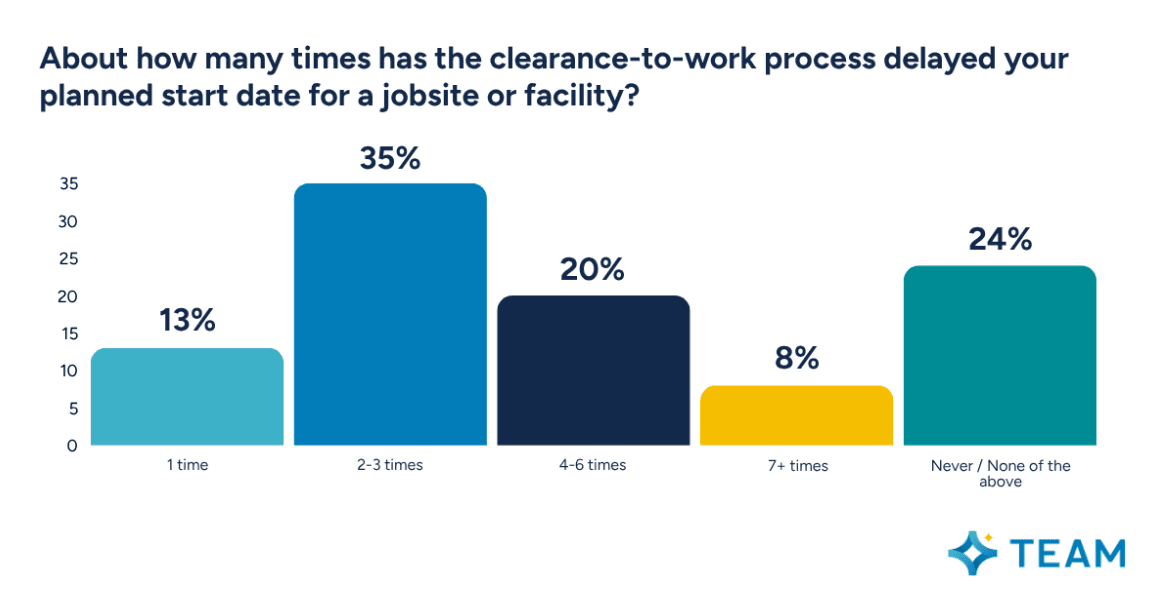
- Delays Are Common: More than three in four contractors (76%) say clearance-to-work has delayed their planned start date at least once, including 35% who’ve been delayed 2-3 times.
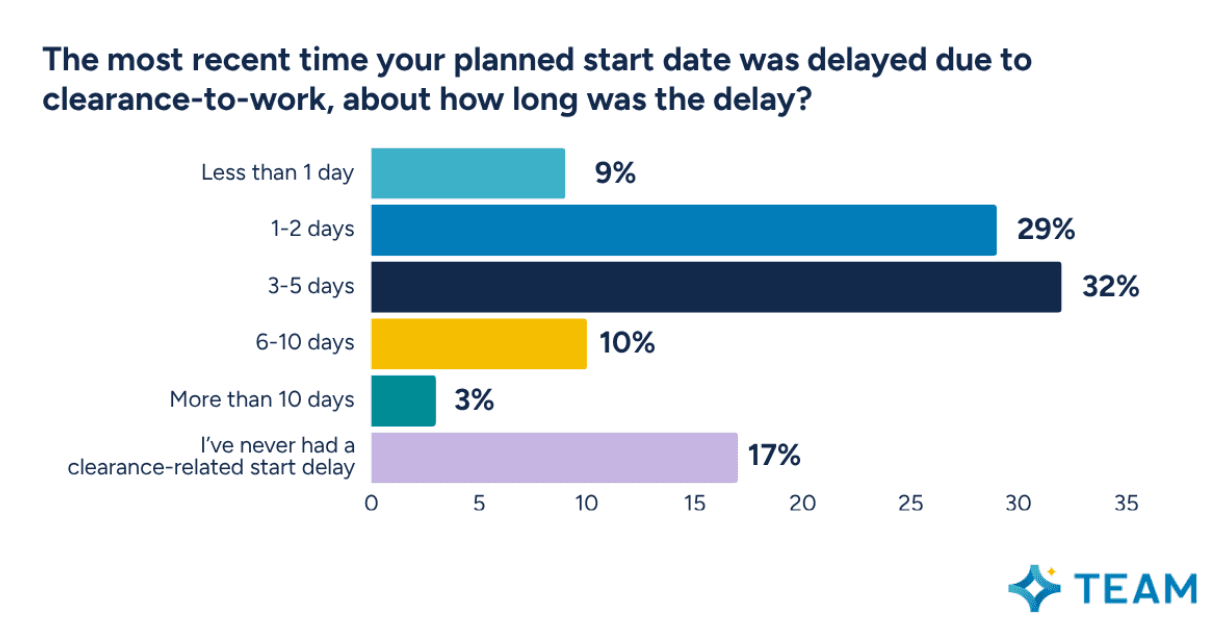
- Delays Often Span Multiple Days: Among those who’ve had a delay, 45% say their most recent clearance-related delay lasted 3+ days, including 10% at 6-10 days and 3% at more than 10 days.
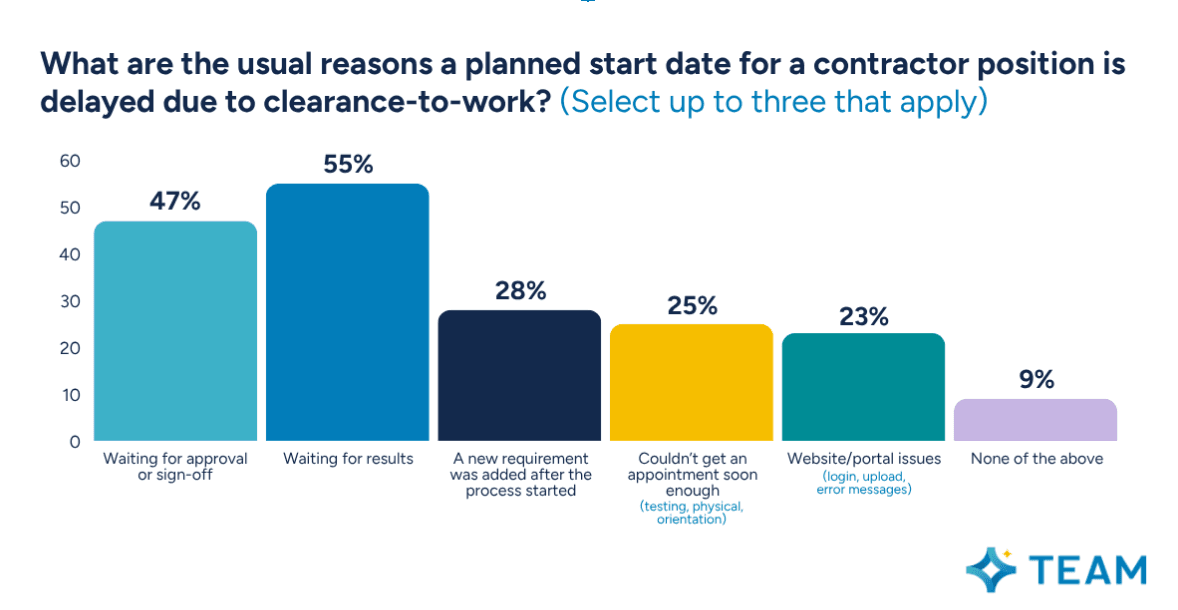
- Delays Come From Waiting and Sign-Offs: The most cited delay reasons are waiting for results (55%) and waiting for approval or sign-off (47%), ahead of portal issues (23%) and difficulty getting appointments soon enough (25%).
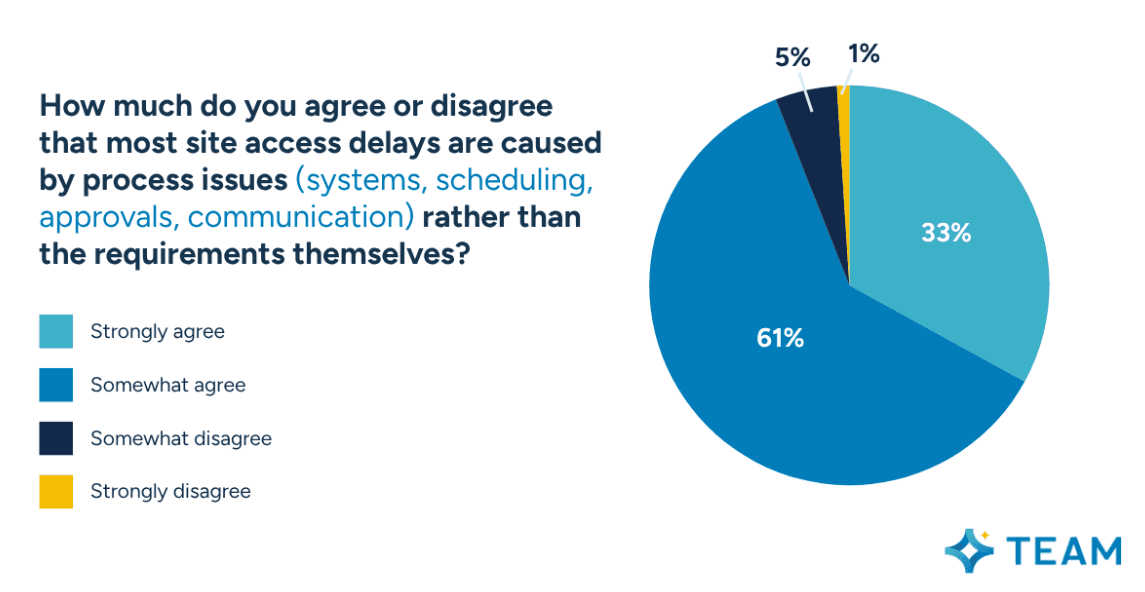
- Contractors Point to Process Friction: 94% agree that most site access delays are caused by process issues rather than the requirements themselves.
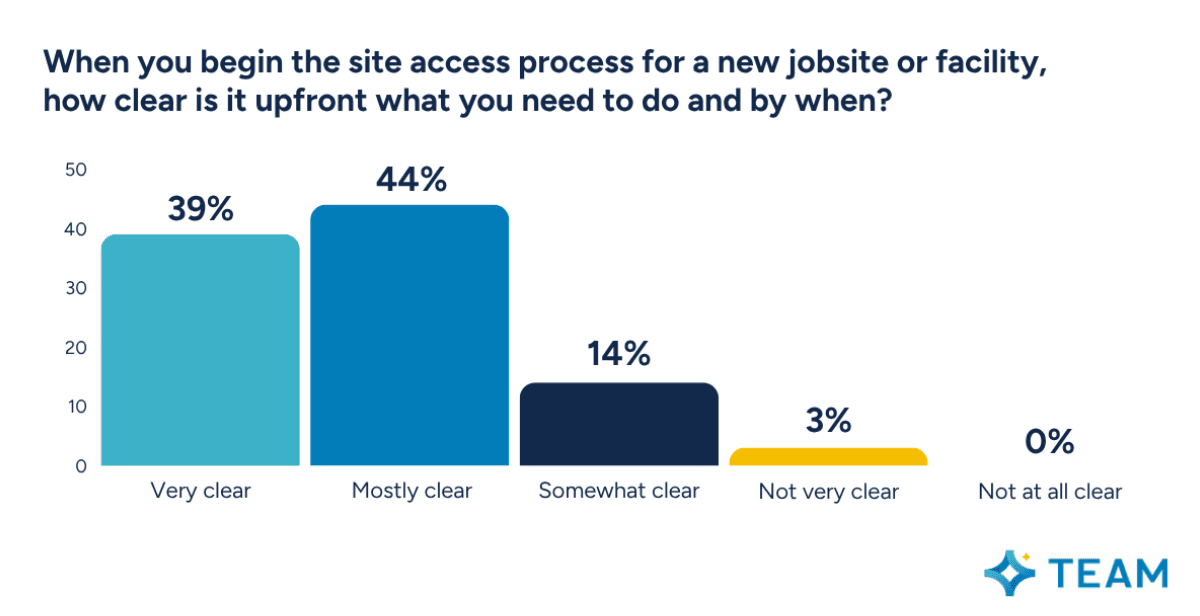
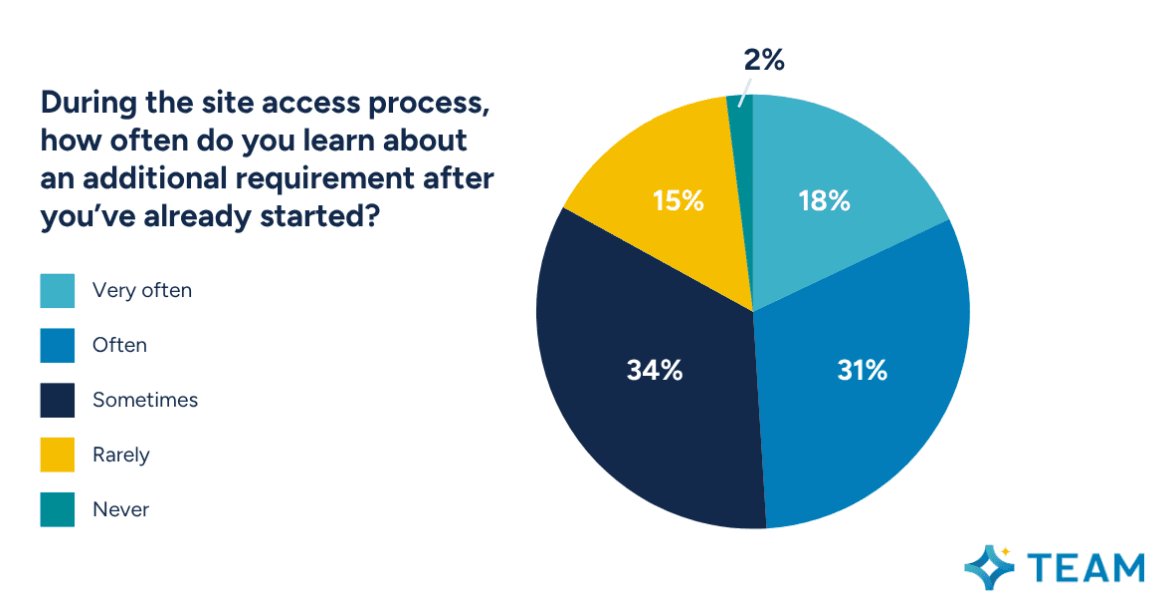
- Clear at the Start, Less Predictable Midstream: Most say requirements are clear when they start (83% very or mostly clear), yet 83% also say they learn about additional requirements after starting at least sometimes, including 49% who say this happens often or very often.
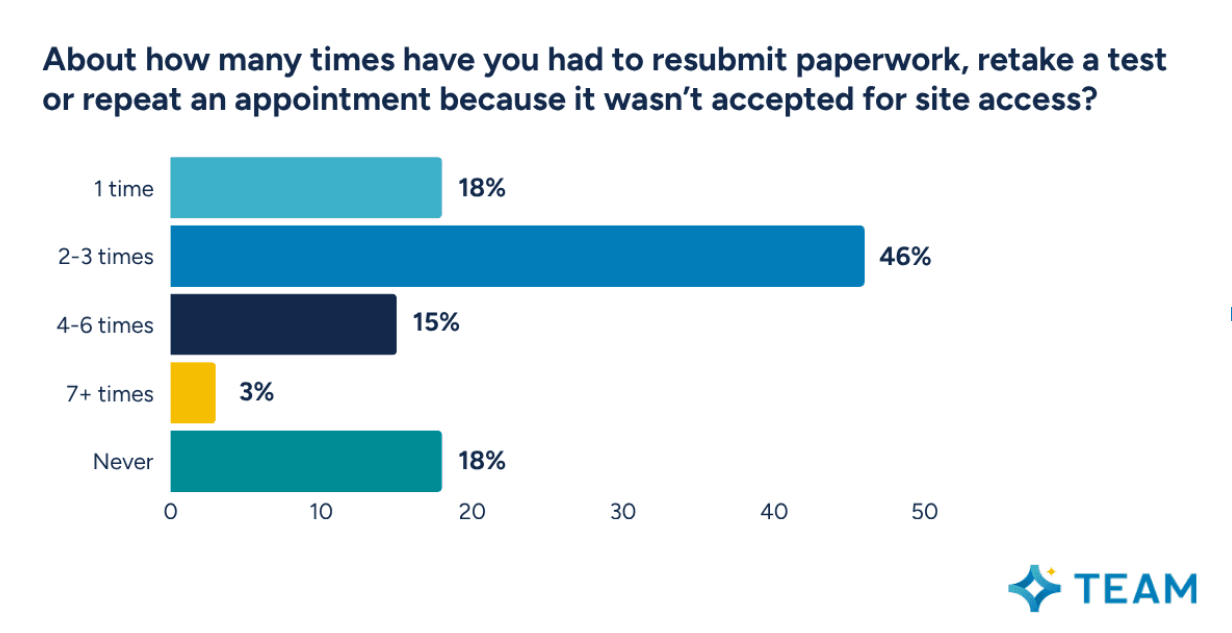
- Rework Is Routine: Nearly two in three (64%) have had to resubmit paperwork, retake a test or repeat an appointment at least twice, including 46% who report 2-3 times.
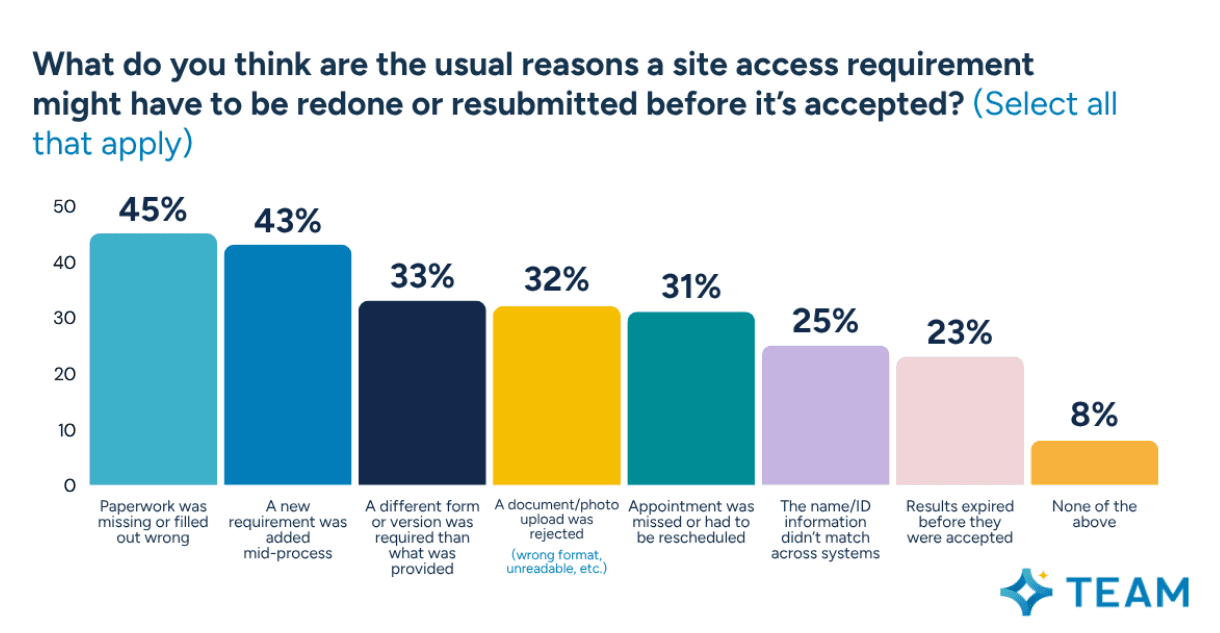
- Redos Often Follow Documentation Gaps and Mid-Process Updates: Top drivers of rework include missing or incorrect paperwork (45%), a new requirement added mid-process (43%) and upload rejection (32%).
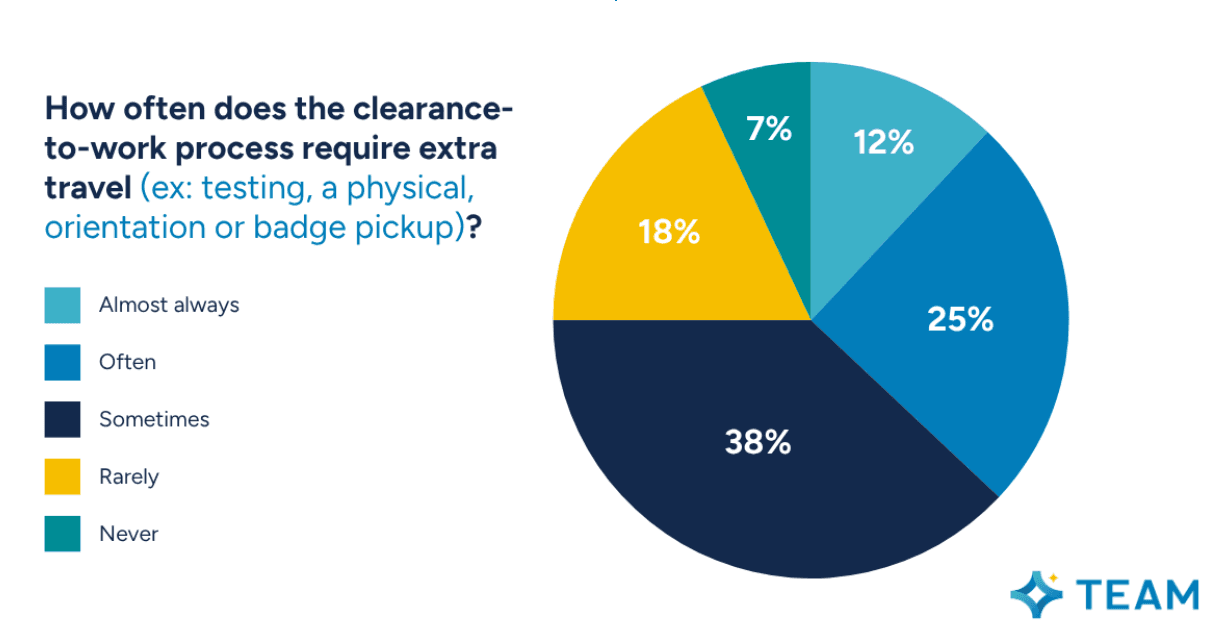
- Extra Travel Is Baked In: Three in four (75%) say site access requirements require extra travel at least sometimes, including 37% who say often or almost always.
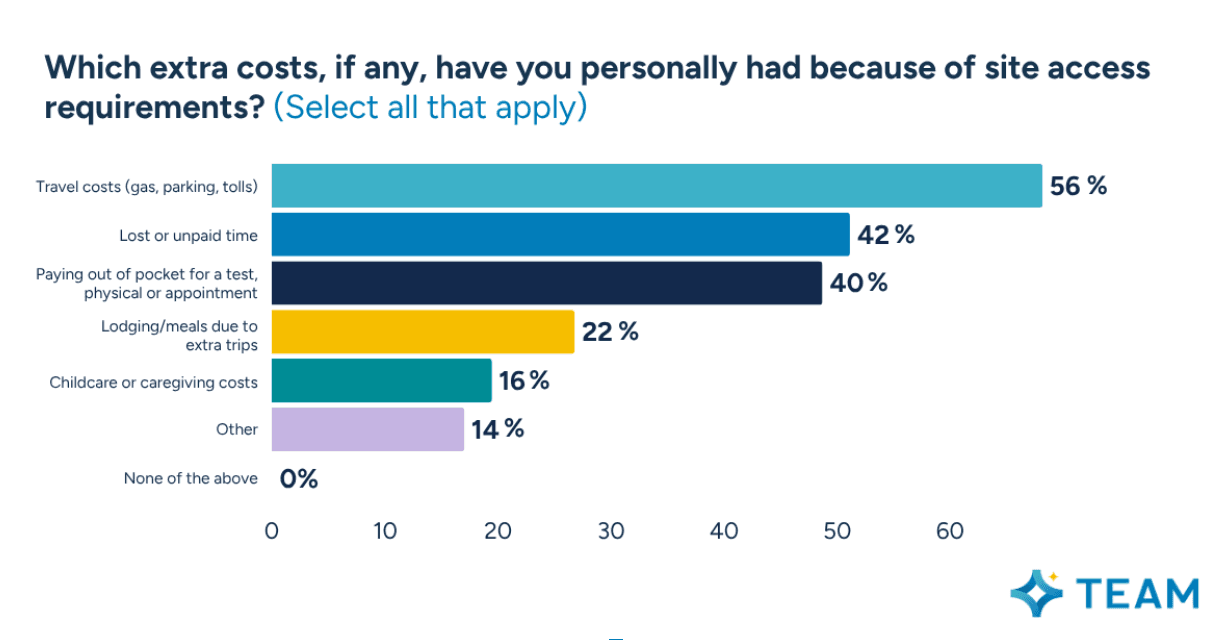
- Out-of-Pocket Costs Are Widespread: Everyone reports at least one out-of-pocket impact, most commonly travel costs (56%), lost or unpaid time (42%) and paying out of pocket for a test, physical or appointment (40%).
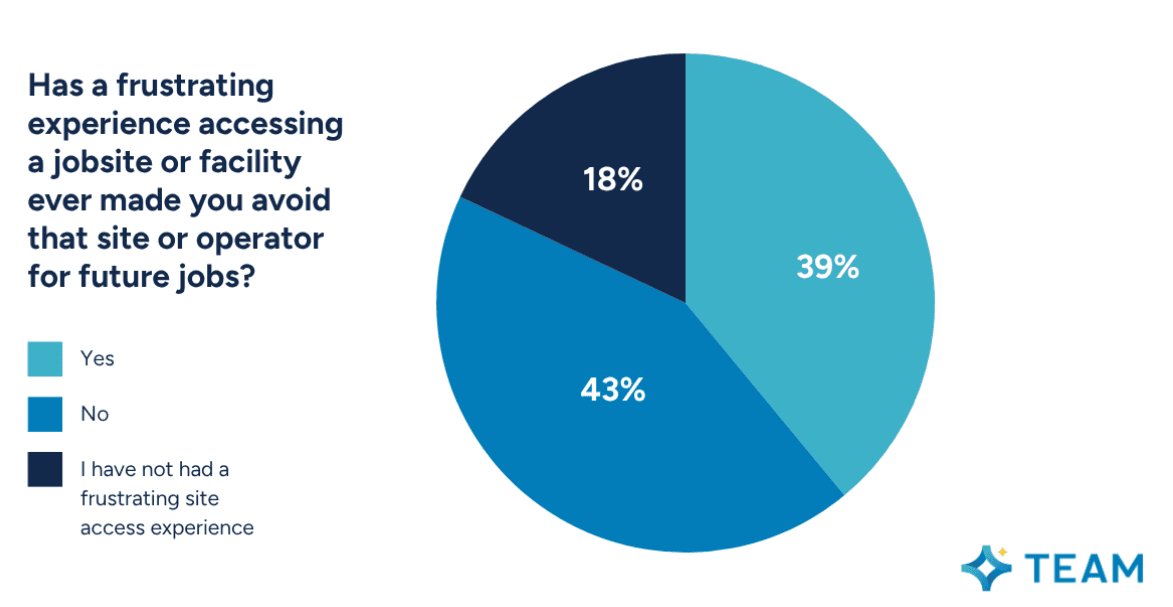
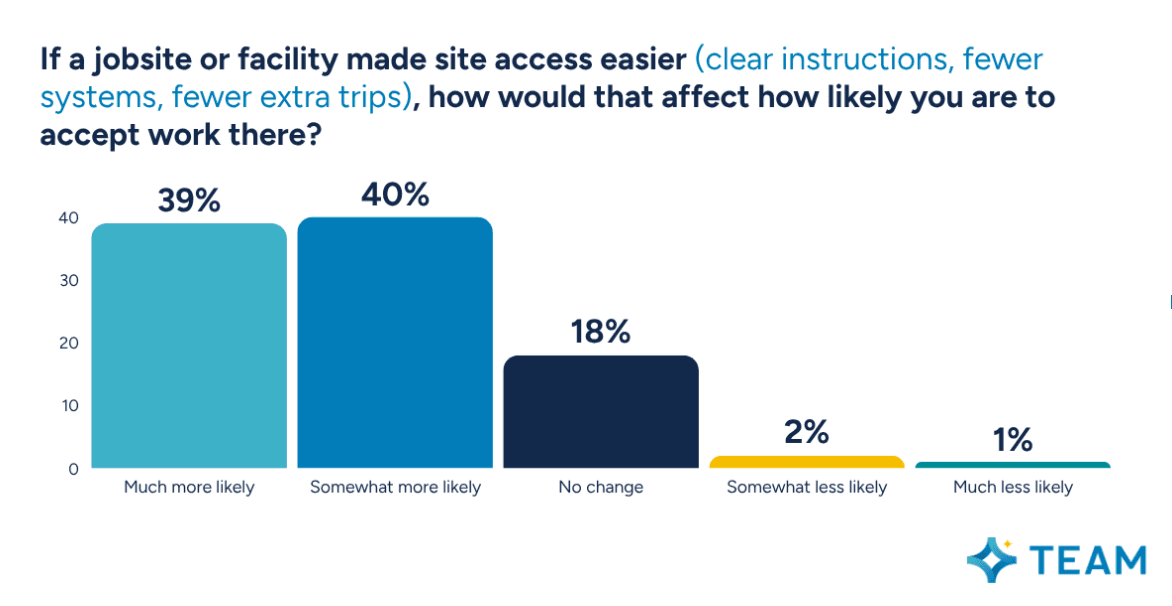
- Access Friction Affects Staffing and Reputation: Nearly four in 10 (39%) say a frustrating site access experience has made them less likely to pursue future work at that site. If a site made access easier, 79% say they’d be more likely to accept work there.
“Compliance protects people and sites, but the process around it shouldn’t feel unclear or unpredictable,” said Tim Jenney, president of TEAM. “The survey results show broad acceptance of oversight alongside widespread frustration with waiting, rework and last-minute changes that delay starts and create avoidable costs. Operators who treat access like a core operational system will be better positioned to attract labor and keep work moving.”
Clearance-to-work delays are a repeat problem.
For many contractors, clearance-to-work delays are part of the job, not an outlier. More than three in four (76%) say clearance-to-work has delayed their planned start date at least once, including 35% who have experienced delays 2-3 times.
When delays happen, they often stretch beyond a single day. Among contractors who have experienced a delay, 45% say their most recent clearance-related delay lasted 3+ days, including 10% who report 6-10 days and 3% who report more than 10 days. In practice, delays of that length can ripple through crew staging, project sequencing and labor availability decisions.
These results suggest clearance-to-work timelines can be difficult to forecast once planning is already underway, especially when multiple handoffs are involved. Even with clear requirements, timelines can extend during handoffs.
The main constraint is waiting for results and sign-offs.
When contractors explain why delays happen, the top reasons point to stall time, not task time. The most cited causes are waiting for results (55%) and waiting for approval or sign-off (47%). Both rank ahead of portal issues (23%) and difficulty getting appointments soon enough (25%). Drug testing and background check programs are designed to prioritize safety and integrity, which means results timing is not always instant. What contractors are reacting to is the downstream uncertainty: not knowing where things stand, who owns the next step or when they can reasonably plan to start.
This matters because it shows the bottleneck is in the process, especially the handoffs. Contractors can complete what’s required and still get stuck waiting on turnaround and approvals. In many cases, delays are less about the requirements themselves and more about turnaround, visibility and multi-party approvals across the process. That view is widespread, with 94% agreeing that most site access delays are caused by process issues rather than the requirements themselves.
The findings suggest an opportunity to reduce variability while maintaining oversight. Since the biggest delay drivers are results and sign-offs, improvements that reduce idle time between steps, clarify ownership and streamline approvals can strengthen start-date reliability without lowering standards. These are the kinds of challenges modern contractor compliance systems are designed to address, helping operators reduce delays while maintaining oversight.
Requirements start clear but often change midstream.
One of the biggest gaps in the data is between how clear requirements feel at the start and how steady they stay through the process. Most contractors say requirements are clear when they begin, with 83% calling them very or mostly clear. That early clarity doesn’t always carry through once the process is underway.
A matching 83% say they learn about additional requirements after starting at least sometimes, including 49% who say this happens often or very often. This creates a start process that’s harder to plan around because the target can shift after someone has already begun.
Mid-process updates can create rework and additional appointments that were not part of the original plan. Over time, that variability can reduce confidence in the site access process even when the intent is to protect safety and meet compliance requirements.
Rework is common and often triggered by changes and rejections.
Rework is another place where friction compounds. Nearly two in three contractors (64%) say they’ve had to resubmit paperwork, retake a test or repeat an appointment at least twice, including 46% who report 2-3 times. That repeat cycle makes the reasons behind rework especially important.
Respondents consistently cite three causes behind the redos: missing or incorrect paperwork (45%), a new requirement added mid-process (43%) and upload rejection (32%). These patterns point to validation steps that happen late, documentation that is submitted in multiple formats and reviews that require resubmission when requirements are interpreted differently across systems.
What makes these breakdowns so costly is how they stack and send the process into a loop. A missing document, a midstream add-on or a rejected upload rarely stays contained to that step. It triggers another round of coordination and waiting and, for many workers, another trip.
The contractor impact includes travel and out-of-pocket cost.
Site access carries real costs for workers, including extra miles, missed hours and direct expenses. Three in four contractors (75%) say site access requirements require extra travel at least sometimes, including 37% who say often or almost always.
Out-of-pocket costs are universal in the data, with every respondent reporting at least one impact. More than half (56%) cite travel costs. Another 42% cite lost or unpaid time. And 40% say they have paid out of pocket for a test, physical or appointment. These costs land directly on contractors and add up quickly when access requires repeat steps or extra travel.
Access friction can shape hiring outcomes. Jobsites with a reputation for extra trips and unreimbursed costs can make contractors think twice, especially if they can take work somewhere else.
Access experience shapes future acceptance and employer brand.
A difficult site access process can affect contractor willingness to return. Nearly four in 10 (39%) say a frustrating site access experience has made them less likely to pursue future work at that site. That creates a real competitiveness issue when sites are drawing from the same contractor workforce.
There’s also a clear upside when the experience improves. If the clearance process were easier, 79% say they’d be more likely to accept work there. For contractors weighing multiple options, fewer hurdles upfront and smoother onboarding can sway the decision.
In practical terms, a smoother experience builds trust. It shows contractors the process is consistent, predictable and respectful of their time.
Industry differences show the same problem taking different shapes.
The core pattern in the survey data holds across all three industries. Delays are common, rework is routine, out-of-pocket costs are widespread and most contractors blame the process more than the requirements. But the level of friction varies in meaningful ways, and a few differences stand out on their own.
- Oil and Gas reports the heaviest strain in this sample. Contractors in that sector are more likely to face repeated delays, inconsistent instructions and higher reported dissatisfaction with the access process. 16% report seven or more delays, compared with 7% in construction and 6% in healthcare. More than two-thirds (68%) say they regularly encounter conflicting instructions, and 52% say a negative access experience made them less likely to accept future work at that site. In oil and gas, the access process creates enough friction to influence whether contractors will take future work at that site or for that operator.
- Construction shows a different kind of breakdown. Contractors there are more likely than those in the other two industries to say requirements are very clear upfront (44%), compared with 28% in oil and gas and 35% in healthcare. Even so, 61% say they still have to navigate two or more portals to complete the process. That suggests clearer instructions at the start do not necessarily create a simpler experience. The process may be easier to understand, but it still requires contractors to navigate multiple disconnected steps.
- Healthcare has the lowest delay rate of the three industries. Nearly one in four contractors (23%) say they have never been delayed, compared with 15% in construction and 8% in oil and gas. But that advantage fades later in the process. Rework and out-of-pocket costs land at nearly the same levels as in the other sectors, which suggests the front end works better while the recovery experience can still be time-consuming when something goes wrong.
Across all three industries, contractors are largely aligned on what drives the problem. Waiting on turnaround, result release and approvals ranks among the top causes of delay in every group. Rework tied to missing paperwork, mid-process requirement changes and upload rejections cuts across sectors as well. The reputational stakes are also consistent. In each industry, roughly four in five contractors say they would be more likely to accept work at a site that made access easier. The friction looks different depending on where contractors work, but the underlying dynamic is the same: a process that creates avoidable delays and costs at the point where labor needs to move.
Waiting, rework and cost add up.
The TEAM 2026 Contractor Compliance Bottleneck Survey shows a consistent pattern: contractors can accept the requirements and still get slowed down by the way clearance-to-work is managed day to day. Delays, repeat steps, extra travel and out-of-pocket costs create start-date instability that contractors feel immediately. The most common choke point is waiting, especially for results and approvals. Late-stage changes add another layer of disruption and help explain why “clear upfront” can still turn into “unstable throughout.”
For operators and sites that rely on contractor labor, the access process shapes how contractors judge the job. When clearance-to-work cycle times are longer than expected or vary from job to job, the impact goes beyond delayed starts. It shows up in avoidance and lower willingness to take future work.
“Strong oversight and a smoother experience can go together,” said Jenney. “The opportunity is to run access like a system, with clear ownership, predictable steps and faster handoffs. When contractors know what to expect and can move through the process without mid-process changes or avoidable rework, everyone benefits.”
Survey Methodology:
TEAM used the third-party survey platform Pollfish to conduct an online survey in March 2026 of 600 U.S. adults aged 18+. Respondents answered a mix of single-select and multiple-select questions. Eligible respondents included U.S.-based adults working in oil and gas, construction or healthcare for contractor or subcontractor organizations who had completed operator-required compliance steps to access a jobsite or facility at least once in the past 12 months. Individuals who did not work in those industries, did not work for a contractor or subcontractor organization or had not completed operator-required compliance steps to access a jobsite or facility in the past 12 months were disqualified from completing the survey. Researchers reviewed all responses for quality control.